Downtown Garland's Unique Architecture
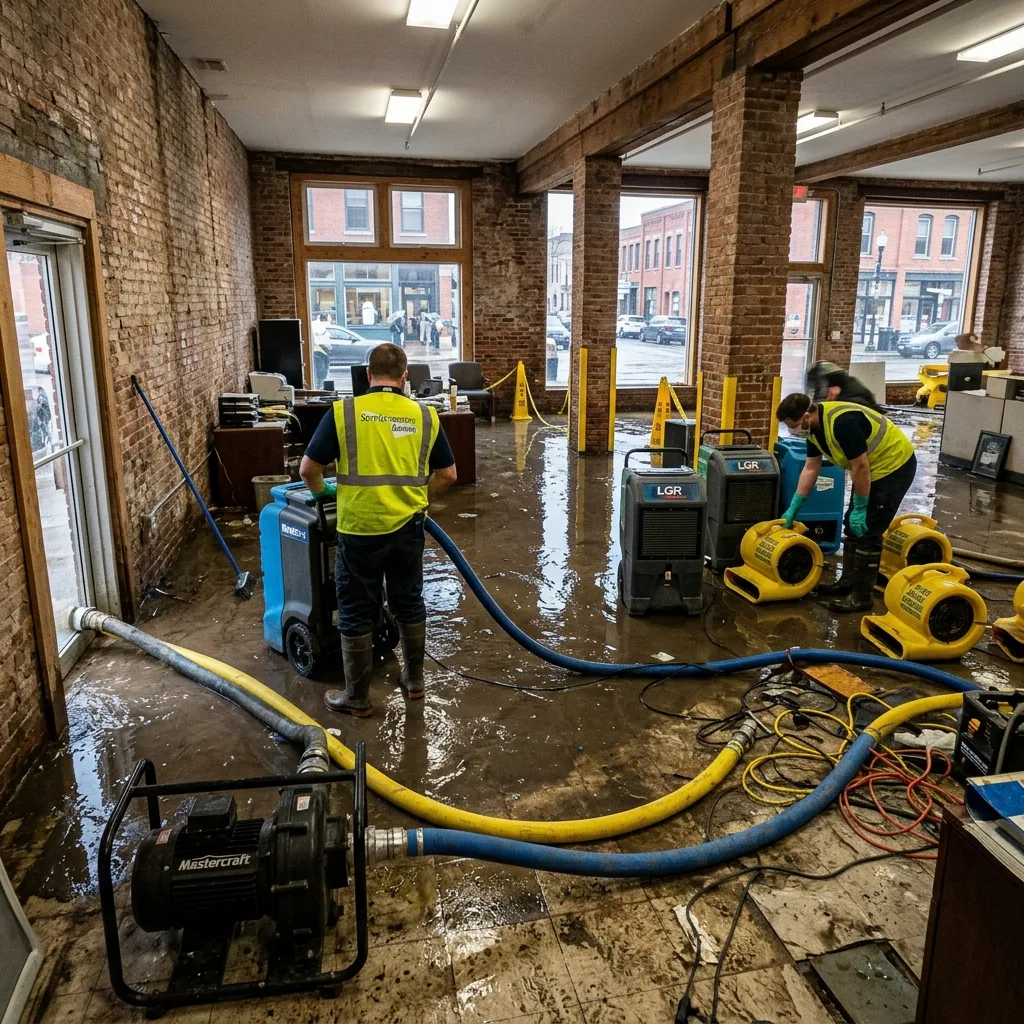
Downtown Garland is the historic heart of our community. The Garland Square and the surrounding commercial streets feature older, brick-and-mortar buildings that have stood for decades. While these structures provide incredible character, they also present unique challenges when water damage strikes.
Older commercial buildings require specialized drying techniques. Aggressive demolition is often not an option when dealing with historic plaster, custom millwork, and aging brick interiors.
Vulnerabilities in Historic Buildings
Aging Plumbing Infrastructure
Many restaurants and retail shops operating in older Downtown Garland buildings rely on aging cast-iron pipes. When these pipes fail, they often cause sewage backups or concealed slab leaks. For a restaurant owner near the Square, a restroom overflow means immediate business closure until contaminated water is cleaned up and the affected area is sanitized.
Flat Roofs and Heavy Rains
Commercial buildings often feature flat roofs. During heavy North Texas spring storms, poor drainage can lead to water pooling, resulting in severe ceiling leaks that damage inventory, electronics, and interior finishes.
Second-Story Apartments
Many Downtown Garland buildings are mixed-use, featuring retail on the ground floor and apartments above. A simple appliance leak in a second-story apartment can quickly migrate down, destroying the inventory and ceiling of the business below.
Discreet Restoration Solutions
Business owners on the Garland Square cannot afford to have a fleet of restoration trucks blocking customer access for days. We prioritize fast, discreet water extraction-often working after hours-to minimize business interruption while utilizing non-destructive moisture detection tools to preserve historic finishes.