Water Damage Garland TX - Trusted Emergency Water Damage Restoration & Cleanup Experts
Licensed, insured, and IICRC-aware water damage restoration for homes, apartments, and commercial properties across Garland and Metro Dallas. Fast response, thorough drying, complete documentation - available 24/7 for emergencies.
Garland & Dallas County
About Expert Water Damage Restoration Company Garland TX
Flood Out Restoration Garland TX has been the go-to water damage restoration company for homeowners, landlords, and property managers across Dallas County and the DFW Metroplex. From burst pipe cleanup in established North Garland neighborhoods to storm water damage near Lake Ray Hubbard, our crew has handled it all - and we bring that hands-on field experience to every project we take on.
At Flood Out Restoration Garland TX, we understand that water damage rarely happens at a convenient time. That's why our emergency response team is available around the clock. When you call, we arrive with professional-grade water extraction equipment, commercial dehumidifiers, air movers, and the moisture detection tools needed to locate hidden water behind walls, under floors, and inside ceiling cavities. Every technician on our team follows IICRC-aware restoration practices to ensure your property is dried thoroughly and documented properly for insurance purposes.
Learn MoreTop-Notch Water Damage Restoration Experts In Garland TX
Garland property owners trust us because we combine field-tested water damage restoration expertise with genuine care for your property. Here's what makes our water mitigation services stand apart.
24/7 Emergency Water Damage Restoration Garland TX
Water damage doesn't wait for business hours. Whether it's a burst pipe at 2 AM in a Firewheel home or a storm-related roof leak on a holiday weekend, our emergency water damage restoration team responds quickly across Garland and Metro Dallas - including nights, weekends, and holidays.
Years of Local Water Mitigation Experience
We've completed hundreds of water damage restoration projects across Garland - from older homes along Centerville Road with slab leak concerns to newer apartments near Jupiter Road dealing with appliance leaks. That local experience means we understand Garland's unique plumbing, foundation, and weather-related water damage challenges firsthand.
Transparent Pricing - No Hidden Fees, Ever
We provide detailed, upfront estimates before any work begins. Our pricing covers the full scope - moisture inspection, water extraction, structural drying, dehumidification, and documentation. No surprise charges, no add-ons after the job is done. We also work directly with your insurance adjuster to simplify the claims process.
Safe, Skilled Water Damage Cleanup Work
Every crew member follows strict safety standards during water damage restoration. We use proper containment for contaminated water categories, full PPE for sewage backup situations, and commercial-grade antimicrobials to prevent mold growth. Our team knows how to work safely around electrical systems, saturated drywall, and weakened structural materials.
Customer Satisfaction Guarantee
We stand behind every water damage restoration project. If you're not completely satisfied with our work, we'll return to address your concerns at no additional cost. Our goal is your complete peace of mind and a fully restored, dry, safe property - whether it's your home, rental unit, or commercial space.
Professional Water Extraction, Drying Equipment & Restoration Tools
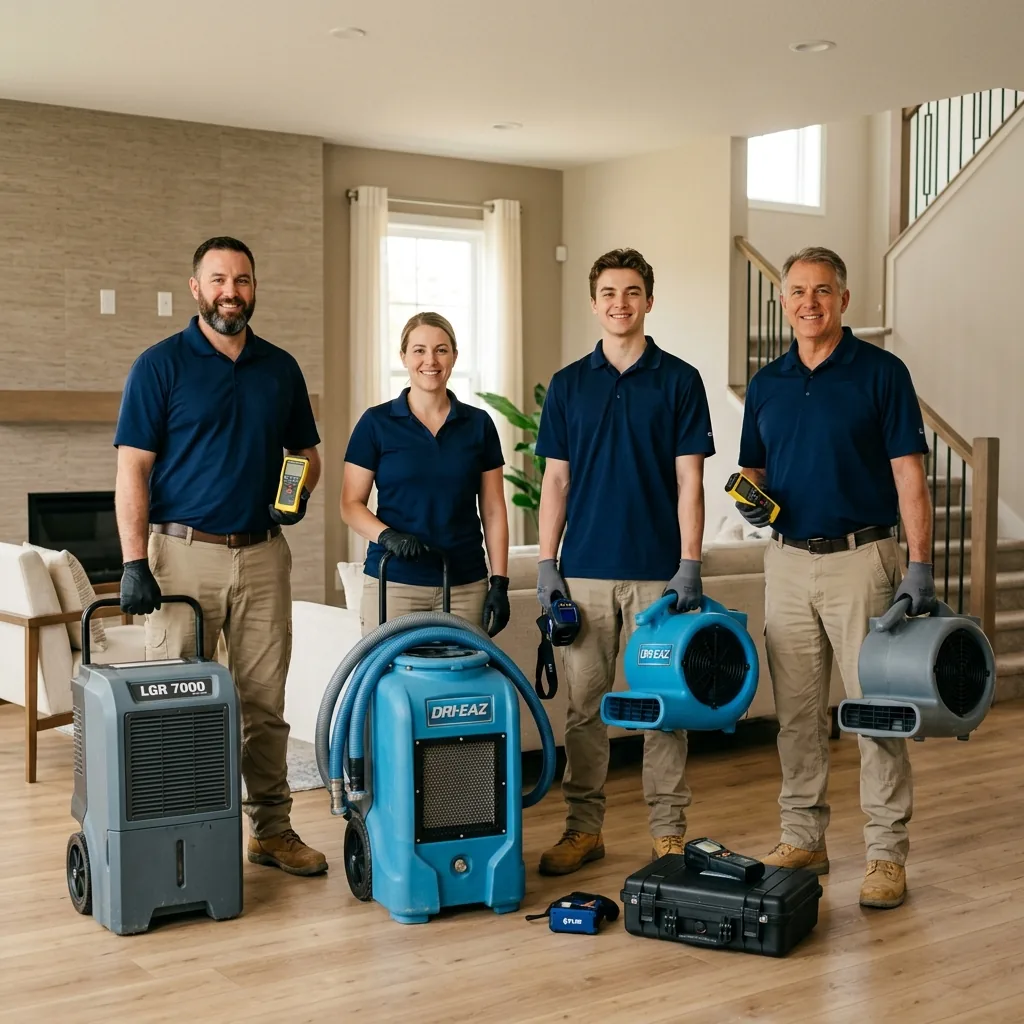
We invest in commercial-grade restoration equipment - from truck-mounted extractors and LGR dehumidifiers to thermal imaging cameras and pin-type moisture meters. Our crew arrives fully equipped for every job, so there are no return trips and no unnecessary delays in getting your property dried and restored.
Our Comprehensive Garland Water Damage Restoration Services
From emergency water extraction after a burst pipe to complete structural drying and mold prevention, we handle every phase of water damage restoration for Garland TX properties. Every service includes thorough moisture detection, professional drying, and detailed insurance documentation.
Residential Water Damage Restoration Garland TX
Emergency Water Extraction
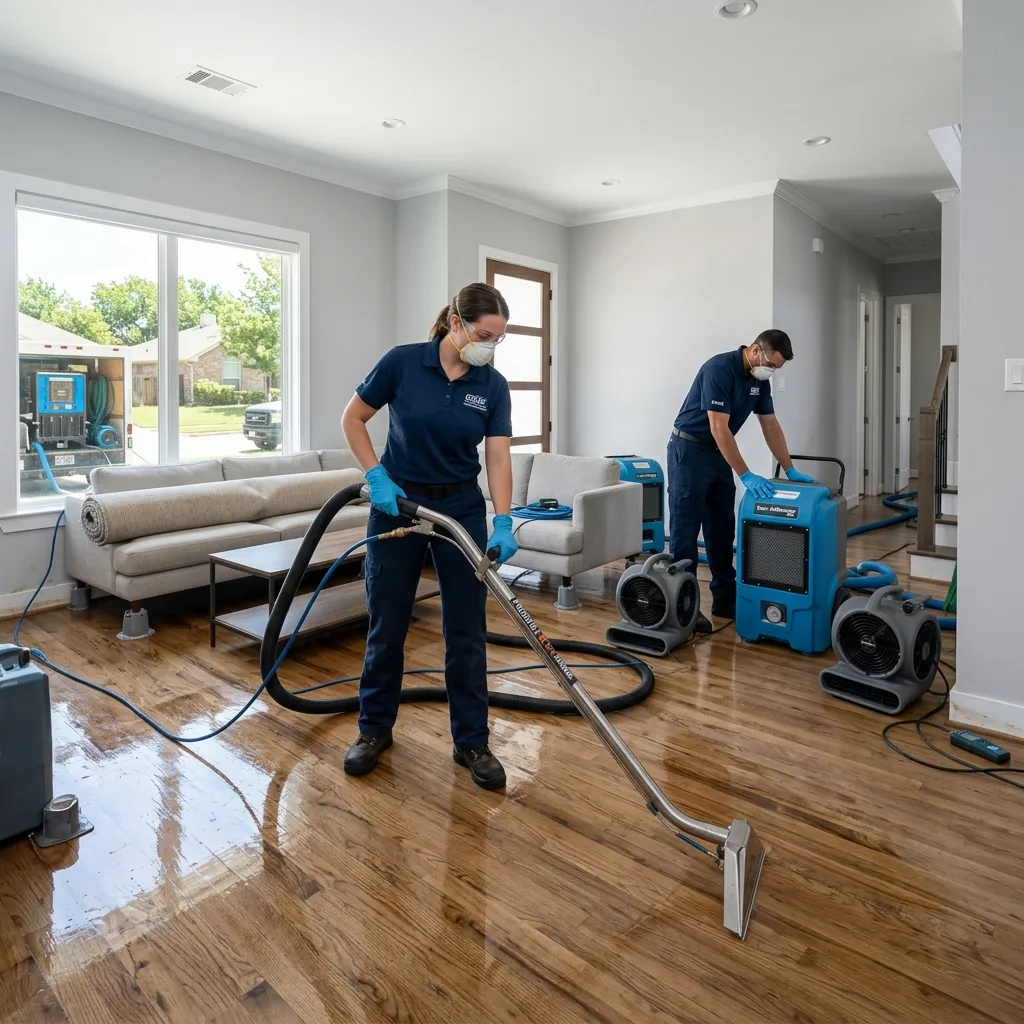
Rapid water removal for Garland homes and businesses dealing with flooding, pipe bursts, or appliance leaks. Our truck-mounted extractors remove standing water fast - from carpet, hardwood, tile, and concrete surfaces - minimizing structural damage and reducing drying time. We respond 24/7 across Garland and nearby Dallas County communities.
Flood Damage Restoration
Comprehensive flood damage cleanup for properties impacted by North Texas thunderstorms, flash flooding near Duck Creek, or heavy rain events. We handle contaminated water extraction, structural drying, damaged material removal, and antimicrobial treatment to prevent secondary damage and protect your property's long-term integrity.
Storm Damage Restoration
Storm water damage cleanup for Garland properties hit by severe weather. North Texas storms bring heavy rain, hail, and wind-driven water that can breach roofs, windows, and siding. Our team addresses roof-related water intrusion, ceiling leaks, attic water damage, and soaked insulation - restoring your property safely and efficiently.
Water Damage Cleanup
Full-service water damage cleanup for every room in your Garland property. Whether it's a kitchen supply line failure, bathroom overflow, or water heater leak in the garage, we remove damaged materials, extract moisture from structural cavities, and apply antimicrobial treatments to prevent mold growth - all with thorough photo documentation for your records.
Structural Drying & Repair
Professional structural drying for water-damaged walls, ceilings, subfloors, and framing. We use LGR dehumidifiers, axial air movers, and daily moisture mapping to track drying progress until every material reaches its dry standard. For Garland's older homes with plaster walls and pier-and-beam foundations, we apply specialized drying protocols that protect original building materials.
Comprehensive Water Mitigation
Complete water mitigation services to stop ongoing damage and prevent secondary issues. We identify the water source, contain the affected area, extract standing water, and implement a targeted drying plan. For properties with slab leak water damage or crawl space moisture concerns, our team uses advanced moisture detection to locate hidden water before it causes structural problems.
Sewage Backup Cleanup
Professional Category 3 contaminated water cleanup for sewage backups and black water events. We safely extract waste, remove contaminated porous materials, decontaminate affected structures with hospital-grade disinfectants, and apply antimicrobial treatments. Garland's aging sewer infrastructure and heavy rain events make sewage backup cleanup one of our most requested services.
Mold Remediation
Mold prevention and remediation services following water damage events. In Garland's warm, humid climate, mold can begin growing within 24 to 48 hours of water exposure. We identify mold-prone areas using moisture meters and thermal imaging, then apply professional containment, removal, and antimicrobial protocols to protect your property and its occupants.
Fire Damage Restoration
Water damage restoration following fire suppression efforts. When firefighters extinguish a fire, the water used often causes significant secondary damage - soaked insulation, waterlogged framing, and standing water in basements and crawl spaces. We extract fire suppression water, dry affected structures, and coordinate with your fire damage contractor for a seamless restoration process.
Specialty Water Damage Restoration Services
Beyond our core residential services, we offer targeted water damage restoration for situations that require specialized equipment, advanced moisture detection, and industry-specific drying protocols.
Commercial Water Damage Restoration
Fast, thorough commercial water damage restoration for Garland offices, retail spaces, restaurants, hotels, and warehouses. We understand that commercial water damage means lost revenue and disrupted operations. Our team works around your schedule - including after-hours and weekends - to minimize downtime near Firewheel Town Center, along Shiloh Road, Belt Line Road, and Broadway Boulevard commercial corridors.
Moisture Detection, Thermal Imaging & Structural Drying
Advanced moisture detection using pin-type and pinless moisture meters, thermal imaging cameras, and hygrometers. We create detailed moisture maps to track hidden water behind walls, under flooring, and inside ceiling assemblies. This data-driven approach ensures we dry every affected material completely - not just what's visible - and provides verifiable documentation for your insurance claim.
Dehumidification, Odor Control & Mold Prevention
Professional dehumidification and odor control after water damage using LGR dehumidifiers, hydroxyl generators, and HEPA air scrubbers. In Garland's humid North Texas climate, rapid dehumidification is critical to preventing mold growth after any water event. We monitor humidity levels daily and adjust equipment placement until every affected area reaches its target moisture level.
Types of Water Damage Restoration Services In Garland
Residential Garland Water Damage Restoration Services
Garland homes, apartments, condos, and rental properties each present unique water damage restoration challenges. Single-family homes in established neighborhoods along Lavon Drive and Belt Line Road may deal with slab leak water damage or aging plumbing. Apartments near Downtown Garland and multi-unit buildings often involve coordinating with property managers, addressing water migration between units, and ensuring discreet cleanup for neighboring tenants.
- Single-family homes, townhomes & duplexes
- Apartments & condos (including HOA-managed properties)
- Rental properties & landlord-managed units
- Basements, garages & crawl space water damage
- Discreet cleanup for residential neighborhoods
Commercial Garland Water Damage Restoration Services
Garland businesses, hotels, offices, retail spaces, restaurants, and municipal properties need water damage restoration that minimizes downtime and reduces liability. We work with property managers, business owners, facilities teams, and HOA boards to deliver fast, thorough commercial water damage cleanup with complete documentation for compliance and insurance purposes.
- Office buildings & corporate spaces
- Hotels, motels & hospitality properties
- Retail stores, restaurants & public venues
- Schools, churches & community buildings
- Warehouses, industrial sites & medical offices
Water Damage Restoration Equipment or Tools Used
Professional water damage restoration demands specialized equipment that goes well beyond standard cleaning supplies. Our crew arrives fully equipped for every job - no return trips, no delays.
Truck-Mounted Water Extractors
High-powered truck-mounted extraction units that remove hundreds of gallons of water per hour from carpet, hardwood, tile, and concrete surfaces - getting water out fast before it penetrates deeper into structural materials.
LGR Dehumidifiers
Low Grain Refrigerant dehumidifiers designed for water damage restoration that pull moisture from the air far more efficiently than standard units - critical for reaching target humidity levels in Garland's warm, humid North Texas climate.
Axial & Centrifugal Air Movers
Commercial air movers strategically placed to create airflow across wet surfaces, accelerating evaporation from carpet, walls, subfloor, and structural cavities. Proper air mover placement is key to efficient structural drying.
Thermal Imaging Cameras
Infrared thermal imaging cameras detect hidden moisture behind walls, under flooring, and inside ceiling assemblies - revealing water intrusion pathways that are invisible to the eye. Essential for finding trapped moisture before it causes mold or structural decay.
Moisture Meters & Hygrometers
Pin-type and pinless moisture meters verify that every material - drywall, wood framing, subfloor, insulation - has reached its dry standard. Hygrometers monitor ambient humidity levels throughout the drying process for complete accuracy.
HEPA Air Scrubbers
HEPA air filtration units capture airborne mold spores, dust, and contaminants during water damage restoration - maintaining indoor air quality and preventing cross-contamination throughout the drying process.
Antimicrobial Treatments
EPA-registered antimicrobial solutions applied during and after water damage cleanup to inhibit mold growth, neutralize bacteria, and protect porous building materials from secondary biological contamination.
Hydroxyl Generators
Advanced odor neutralization technology that eliminates musty, damp odors at the molecular level - safe to use in occupied spaces, unlike ozone machines. Essential for odor control after water damage in homes and commercial properties.
Our Step-by-Step Water Damage Restoration Process
Every water damage restoration project follows a structured, IICRC-aware process to ensure thoroughness, safety, and proper documentation from start to finish.
Emergency Contact & Moisture Assessment
Call us 24/7 at (214) 619-8406. We gather initial details, dispatch our team, and arrive with thermal imaging cameras and moisture meters to assess the full extent of water intrusion - including hidden moisture behind walls and under floors. We also begin photo documentation for your insurance claim immediately.
Water Extraction & Containment
Our crew deploys truck-mounted extractors to remove standing water quickly from all affected surfaces. We establish containment to prevent water migration to unaffected areas, remove saturated carpet padding, wet insulation, and damaged baseboard and drywall sections when needed to expose structural cavities for drying.
Structural Drying & Dehumidification
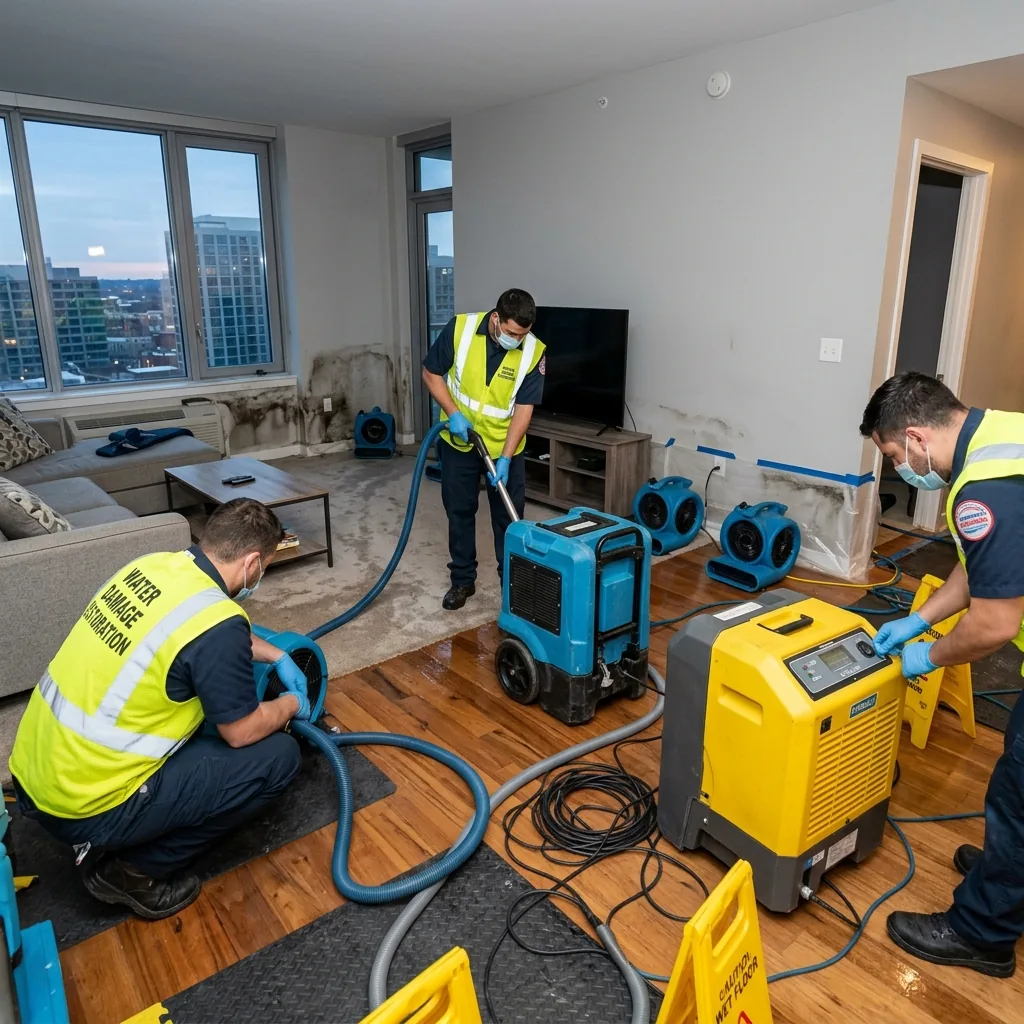
We strategically place LGR dehumidifiers and air movers throughout the affected areas. Daily moisture readings track drying progress until every material - walls, subfloor, framing, concrete - reaches its dry standard. We apply antimicrobial treatments to prevent mold growth during the drying cycle.
Final Clearance, Documentation & Restoration
Once drying is verified with moisture meter readings, we remove our equipment, perform a final walkthrough, and provide complete documentation - moisture logs, before-and-after photos, and itemized reports for insurance. Your property is returned to you dry, safe, and ready for any needed repairs or rebuilding.
Common Water Damage Problems in Garland Properties & How to Spot Them
Knowing what to look for helps Garland property owners respond quickly and protect occupants. Here are the most common water damage situations we encounter across Metro Dallas.
Burst Pipe & Supply Line Failures
Garland homes - especially those built in the 1970s and 1980s along Centerville Road and Broadway Boulevard - are susceptible to aging copper and galvanized plumbing failures. Watch for unexplained water stains on ceilings, walls that feel damp to the touch, or a sudden drop in water pressure. During North Texas freezing weather, exposed pipes in attics and exterior walls can burst without warning.
Slab Leak Water Damage
Garland's expansive clay soil and post-tension slab foundations create conditions for slab leaks - water lines that fail beneath the concrete foundation. Signs include warm spots on floors, the sound of running water when all fixtures are off, or unexplained increases in your water bill. Slab leak water damage requires specialized moisture detection and targeted structural drying to prevent long-term foundation and flooring damage.
Storm & Roof-Related Water Intrusion
North Texas thunderstorms bring heavy rain, hail, and high winds that can damage roofing materials, flashing, and siding. Water intrusion through compromised roofs often shows up first as ceiling stains, bubbling paint, or dripping from light fixtures. Properties near Lake Ray Hubbard face additional storm exposure from wind-driven rain.
Appliance Leaks & Overflow
Water heater failures, washing machine hose bursts, dishwasher supply line leaks, and toilet overflows are among the most common causes of residential water damage in Garland. These leaks often go unnoticed for hours, allowing water to saturate subfloor, drywall, and cabinetry. Early detection and fast response prevent far more expensive repairs later.
Water Migration in Multi-Unit Buildings
In Garland's apartment complexes and condos, water from an upstairs unit can quickly migrate through floors, walls, and shared plumbing chases to affect multiple units. Property managers and HOA boards often need coordinated water damage restoration across several units simultaneously - with clear communication and thorough documentation for each affected unit.
Sewage Backup & Contaminated Water
Heavy rain events in Garland can overwhelm aging sewer systems, causing raw sewage to back up through floor drains, toilets, and bathtubs. Category 3 contaminated water poses serious health risks and requires professional extraction, removal of contaminated materials, and hospital-grade disinfection. Never attempt to clean sewage backup without proper safety equipment.
Garland Water Damage Restoration Projects & Case Studies
The Downtown Garland Apartment - Discreet Water Extraction, Drying & Odor Control
A Downtown Garland property manager contacted us after a second-floor washing machine supply line burst overnight, flooding the unit and the first-floor apartment below. Water had saturated carpet, padding, drywall, and baseboard in both units. Our team arrived within 90 minutes, extracted all standing water, removed damaged materials, set up LGR dehumidifiers and air movers in both units, and applied antimicrobial treatment to prevent mold. We coordinated directly with the property manager and provided complete insurance documentation within 36 hours - all while maintaining discreet access for neighboring tenants.
The Firewheel Commercial Property - Emergency Water Mitigation & Same-Day Drying Plan
A Firewheel-area commercial property owner discovered water pouring through the ceiling of their retail space after a rooftop HVAC condensate line failed. Water had damaged ceiling tiles, soaked commercial carpet, and pooled around retail inventory. Our team performed same-day emergency water extraction, installed commercial-grade drying equipment across 4,200 square feet of affected retail space, and implemented a moisture monitoring plan. The business remained open during restoration with minimal disruption to customers. Complete insurance documentation was delivered within 48 hours.
Water Damage Restoration FAQs for Garland TX Property Owners
We offer 24/7 emergency water damage restoration across Garland and Metro Dallas. In most cases, our team arrives within 60 to 90 minutes of your call, depending on your location and current traffic conditions. We respond to emergencies on weekends, holidays, and after hours - because water damage gets worse with every hour that passes.
Most homeowner and commercial property insurance policies cover sudden and accidental water damage - such as burst pipes, appliance failures, and storm-related water intrusion. We provide detailed documentation including timestamped photos, moisture readings, itemized service reports, and equipment logs to support your insurance claim. We also work directly with your adjuster to streamline the process.
Most residential water damage restoration projects take 3 to 5 days for the drying phase, depending on the extent of water intrusion, the materials affected, and ambient humidity conditions. Water extraction is typically completed within the first few hours. We monitor moisture levels daily and only remove equipment once every material has reached its verified dry standard.
We serve all of Garland and the broader Metro Dallas area including Rowlett, Richardson, Mesquite, Sachse, Plano, Dallas, Rockwall, Wylie, Murphy, and Sunnyvale. We also cover properties in Dallas County, Collin County, and Rockwall County throughout the DFW Metroplex.
Yes. In Garland's warm, humid North Texas climate, mold can begin growing on damp materials within 24 to 48 hours after water exposure. That's why fast water extraction and professional drying are critical. We apply antimicrobial treatments during the drying process and monitor humidity levels daily to prevent mold growth before it starts.
Yes. We handle water damage restoration for homes, apartments, condos, rental properties, offices, retail stores, restaurants, hotels, schools, churches, medical offices, warehouses, and municipal properties. Our team has the equipment and experience to handle projects of any size - from a single-room pipe leak to a full commercial building flood.
If it's safe to do so, turn off the water supply to stop the source of the leak. Move valuable items and electronics away from standing water. Avoid using electrical appliances in wet areas. If the ceiling is sagging from water weight, stay out of the room. Do not attempt to use household fans or vacuums for water removal - these can spread contamination and are not effective for proper structural drying.
We use thermal imaging cameras that detect temperature differences caused by moisture behind walls and under flooring. We also use pin-type and pinless moisture meters to measure moisture content in drywall, wood framing, concrete, and subfloor materials. This technology allows us to find and dry hidden water before it causes mold, structural decay, or odor problems.
We Serve All of Garland, Dallas County & Metro Dallas
From Downtown Garland homes to suburban properties across the DFW Metroplex, our water damage restoration team responds quickly to properties throughout the entire Metro Dallas area.
Nearby Cities
Neighborhoods
We Served Water Damage Restoration Nearby Zip Codes
Our water damage restoration coverage includes all Garland and Metro Dallas zip codes. If your zip code is listed below, we can be at your property quickly.
Ready for a Free Water Damage Restoration Assessment? Let's Get Started
Whether you need emergency water extraction, flood damage cleanup, or a moisture assessment for your property, our Garland team is ready to help. Call now for a free, no-obligation estimate - we respond 24/7.
(214) 619-8406Serving Garland & the Entire Metro Dallas Area
Our water damage restoration team proudly serves Garland, Dallas County, and all surrounding Metro Dallas communities - from Plano and Richardson in the north to Mesquite and Sunnyvale in the south.
Water Damage Restoration & Prevention Resources
Stay informed with expert advice on water damage prevention, restoration best practices, and property protection tips for Garland homeowners and businesses.
 Property Guide
Understanding Water Damage Restoration Costs in Garland TX
Learn what affects restoration pricing after pipe bursts, storm intrusion, and appliance leaks in Garland properties.
Insurance
Insurance Documentation for Water Damage in Dallas County
See what photos, moisture readings, and cleanup records insurers often need after water damage.
 Safety
The Risks of DIY Water Damage Cleanup in Garland
Find out why surface drying can miss hidden moisture and lead to mold, odors, and secondary damage.