
Why Restoration Costs Vary Across Garland
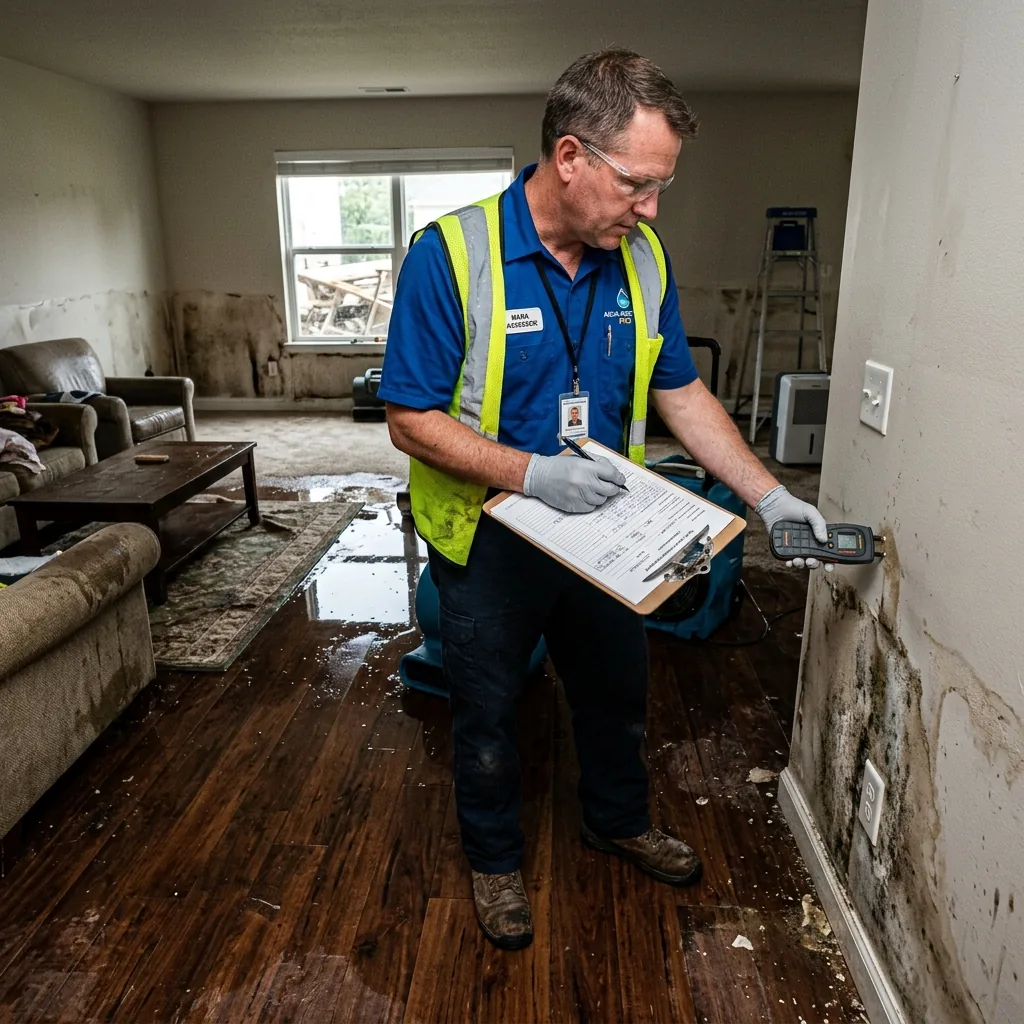
When a pipe bursts or a heavy North Texas storm sends water rushing into your property, one of the first questions on every property owner's mind is: "How much is this going to cost?" The truth is, water damage restoration costs are rarely a one-size-fits-all number.
In our experience serving the DFW Metroplex, the cost of water cleanup and structural drying depends heavily on the type of property, the materials affected, and the location. An apartment building dealing with water migration near Downtown Garland faces very different challenges than a retail storefront near Firewheel Town Center experiencing a sudden restroom overflow.
Restoration costs depend not just on the volume of water, but on the type of water (clean vs. sewage contamination) and how quickly extraction and dehumidification begin.
Cost Factors by Property Type and Location
Let's look at how water damage restoration challenges-and the resulting costs-change depending on where you are in Garland and what type of property you own.
1. Multi-Family Apartments (Downtown Garland & North Garland)
When an appliance leaks in an apartment, water rarely stays contained to a single unit. It migrates through walls and subfloors, often affecting the units below and adjacent to the source. Property managers in Downtown Garland and North Garland frequently deal with this cascading effect.
- Cost Drivers: Coordinating access across multiple tenants, extensive structural drying between floors, and potential tenant displacement.
- Mitigation Strategy: Fast water extraction and aggressive dehumidification to prevent mold growth in shared wall cavities.
2. Retail & Commercial Spaces (Firewheel Town Center)
For businesses, water damage isn't just a repair cost; it's a business interruption cost. A flooded retail space during a busy shopping weekend near Firewheel Town Center requires discreet, rapid response.
- Cost Drivers: After-hours emergency water extraction, protecting high-value inventory, and working around customer schedules.
- Mitigation Strategy: Deploying high-capacity commercial dehumidifiers and air scrubbers to remove standing water and moisture overnight, minimizing downtime.
Have an emergency response plan in place. Knowing exactly who to call for after-hours water extraction near Firewheel, Shiloh Road, or Belt Line Road can save thousands in inventory and lost revenue.
3. Office Buildings & Medical Facilities (Shiloh Road & Belt Line Road)
Offices and medical spaces along Shiloh Road often feature raised flooring, extensive drywall, and sensitive equipment. A sprinkler discharge or plumbing failure here requires specialized handling.
Costs in these environments are heavily influenced by the need to protect electronics, dry complex structural cavities, and maintain indoor air quality during the cleanup process.
4. Single-Family Homes (Lake Ray Hubbard & Established Neighborhoods)
Garland boasts beautiful, established neighborhoods, but older homes-especially those near South Garland or the Lake Ray Hubbard area-come with unique risks. Slab leaks, aging plumbing, and storm-related roof leaks are common.
- Cost Drivers: Hardwood floor drying, hidden moisture in aging drywall, and restoring older, custom finishes.
- Mitigation Strategy: Utilizing thermal imaging and advanced moisture detection to find hidden water behind walls without unnecessary demolition.
The Cost of Delay
No matter where your property is located-whether you're an HOA managing a townhome community in Sachse or a homeowner in Rowlett-the single biggest factor that drives up water damage restoration cost is delay.
"Water damage doesn't pause. Within 48 hours, clean water can degrade, and mold prevention becomes a much more costly mold remediation."